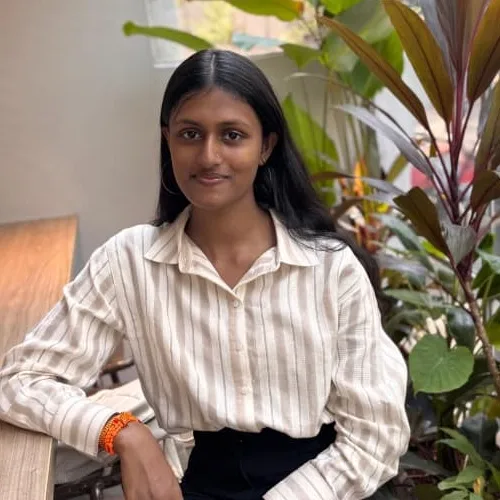
When I started my B.E. in Medical Electronics Engineering, I did not plan on a software career. I was interested in how medical devices work: sensors, signals, and the electronics that turn a heartbeat into a number on a screen. Software was the tool I picked up to make those ideas move. Somewhere along the way, the tool became the craft.
Looking back, my path has three clear phases: web development, app development, and automation engineering. They look like different careers, but each one taught me something the next one needed.
Phase 1: The web, where I learned to ship
My first real engineering habits came from the browser. At Scoop Labs, part of NumaSoft Technologies, I worked as a Software Development Engineer intern on React frontends. I helped build modular, reusable components and shipped web properties with Vite, working closely with design and backend teammates.
The web taught me the basics that I still rely on every day. Components should be small and reusable. A page that looks right but feels slow is not finished. And a feature is not done until a real person can use it, under a real deadline, on a device you did not test on.
It also taught me to collaborate. Design hands you a vision, the backend hands you an API, and your job is to make them meet cleanly. That is a very different skill from solving a problem alone in a notebook.
Phase 2: Apps, where I learned to own a whole product
Once I was comfortable in the browser, I wanted to build things that lived outside it. I made a Healthcare Management Dashboard in Java Swing, a hospital-themed desktop app covering patients, doctors, appointments, billing, pharmacy, and emergency workflows, with light and dark themes and charts. Later I built Swarabodha, a Carnatic music app that detects pitch from a microphone and recognizes ragas, and then ported the same detection engine to a native Python and PyQt desktop app.
Building desktop apps changed how I think about structure. There is no framework quietly carrying you. You decide how models, views, and utilities are separated, how panels navigate, and how data is saved. Porting Swarabodha from TypeScript in the browser to Python and Qt was the best lesson of all: moving the same logic to a different runtime exposed every assumption I had baked into the first version.
This phase is also where my medical electronics background started to pay off. Pitch detection is signal processing. A hospital dashboard is a clinical workflow. The Smart Injector I built earlier, with an ESP32, an ultrasonic sensor, and a stepper motor, was already teaching me that sensing, computing, and acting all have to line up.
Phase 3: Automation, where software meets everyday engineering work
My current role is as an Academic Intern at Moog India Technology Center, on the Commercial Automation - Test team. This is a different kind of software. The users are my own colleagues, and the goal is not a flashy interface but removing hours of repetitive work.
I have worked on two internal tools so far, both in Python with SQLite:
- A workforce utilization tracker with role-based hours and leave entry, an approval workflow, Excel and PivotTable import, dashboards that compare utilization against targets, PDF and Word exports, and scheduled monthly email reports.
- A skill-matrix manager built with tkinter that imports Excel data and verifies it so nothing is silently dropped, shows a role-scoped employee-by-skill matrix, keeps a hash-chained audit log, and exports to XLSX and PDF.
Automation work rewards a different kind of care. When a tool replaces a spreadsheet process that people trust, correctness matters more than polish. That is why I added verification on import and an audit log that is hard to tamper with. If someone asks "where did this number come from?", the tool should be able to answer.
What connects the three phases
- Start from the user's workflow, not the technology. Hospital dashboards, raga learners, and workforce planners all have a real process underneath.
- Reusable structure beats cleverness, whether that is a React component, a Swing panel, or a Python import pipeline.
- Verify everything that matters. Signal integrity on a hospital device and cell counts on an Excel import are the same instinct.
- Learning low-level things, like building a container runtime in Go, makes the high-level tools less magical and easier to debug.
Why a medical electronics degree helped
It is easy to think switching from electronics to software means leaving your degree behind. For me it has been the opposite. Medical electronics trained me to think in systems: input, processing, output, and the cost of getting any step wrong. That mindset carries over to code. A web app, a desktop app, and an automation tool are all pipelines that need to be trustworthy.
What is next
I am still a student, so I am treating this as the start of the story. I want to keep going deeper into systems programming and applied machine learning while building tools that make real teams faster. If you are on a similar path, coming from a different engineering branch into software, my advice is simple: build something real in each new area, ship it to someone who will actually use it, and write down what surprised you.